
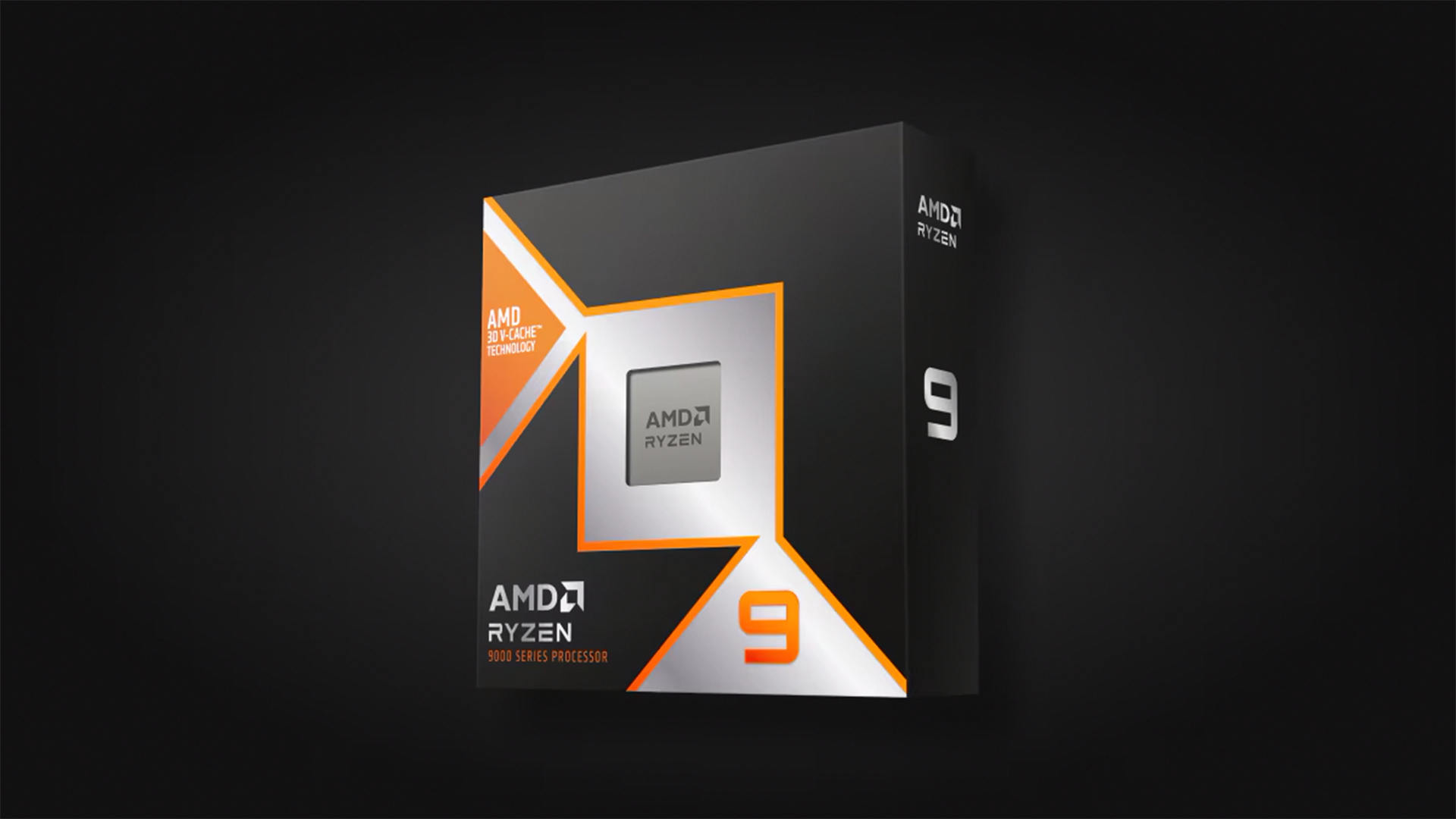
As our first CPU look of the year, we return with two new models from AMD’s X3D range. With prior X3D generations having often proven to be the strongest option in gaming terms upon launch, they’ve always been more of a mixed bag for productivity applications and particularly for audio use where they’ve tended to make far less of an impact. This isn’t our first look at the current generation with the inclusion of the 9800X3d chip in our last testing round-up, whereas today we look at the upper models within the range, namely the 9900X3D and 9950X3D chips.
Like the previous generations CPU’s at this level in the range, these chips are both dual CCD (Core Complex Die) block by design, with the CPU cores being split across the two CCD’s as opposed to the single CCD arrangement found on the 9800X3D chip that we’ve seen previously. Once more we see a design where the extra cache that features on these chips only appears upon one of the CCD stacks, although in that regard there is an interesting change to note here. With prior generations we’ve seen the extra cache stacked upon one of the CCD blocks, which has tended to lead to poor contact against the heat-spreader and ultimately resulting in hot-spots that went on to limit the all-core turbo performance.
With this generation the core die block has been stacked on top of the cache instead giving it direct contact to the heat spreader, leading to layout with a more effective heat dispersal from the CPU cores and in general an easier to cool CPU overall. This has meant that we now see a 9950X3D model which not only matches their none X3D variant with both it’s advised clock and turbo speed ratings, but it also manages to do so at the same power rating as the regular 9950X, meaning that we now get to see how the extra cache may help when all other key performance metrics are on a more level playing field.
Underload the 9950X3D managed to hold around 5GHz – 5.15GHz under sustained testing, on a power draw of around 210w’s after first reaching it’s 230W PPT max power rating during the initial quick bursts. Intel in a similar fashion on the 285K will first jump to around it’s 250w Turbo rating before tending to settle down to around 240w’s under longer sustained loads, which on average puts the 9950X3D’s chip at around 10% lower power draw than the 285K in extended load testing.
Whilst we return to testing with our regular Silent Loop 360mm AIO cooler the chip itself should be easily cooled by any reasonably high-performance air cooler, allowing for a flexibility in available installation options. Memory in use is a 48GB Corsair Vengeance 5600MHz kit with AMD Expo timings. In line with rest of the 9000 series chips the CPU’s have official memory ratings of 5600MHz on a dual stick arrangement and 3600MHz across a quad stick setup. The memory performance can have a notable effect on the VI test results and this means that ideally in performance terms there is a bit of a 96GB limitation across two sticks, unless a your mainboard manufacturer specifically adds a faster known working quad pack setup to their own QVL sheet. As per the rest of the range the optimal memory speed is around 6000MHz on this gen, although the difference observed in testing between the official rating of 5600MHz and 6000MHz is barely a couple of percent in prior DAWbench results, although as pricing continues to drop on the faster kits and they approach cost parity it remains one minor upgrade to consider.

With the 9950X3D holding an all-core turbo speed similar to it’s none X3D variant, it’s interesting to see how this is reflected in the DSP test where in prior generations we’ve normally tended to see a loss in performance on the X3D models due to a reduction in clock speed. In this instance we get to see gains on the X3D chips over the standard models, most notably on the lowest buffer settings with results drawing closer together as we step up through the settings in the test, but a definite improvement nonetheless. The 9950X3D still comes in behind Intel’s 285K in this test, which focuses on raw performance across the entire chip but it’s a convincing second place and certainly it’s exciting to see an improvement occurring here, where normally we would have expected it to fall behind the regular none X3D variant.

The benefits of the X3D cache have always been seen the most clearly when we’ve looked over the VI test on previous generations, and once more this continues to be the case here. With the test built around Kontakt instances and measuring overall polyphony, it can be impacted by both CPU and Memory performance where it makes perfect sense that additional cache on offer would make the most impact. Once more we see the lowest 64 buffer results show a strong win for the X3D models, which in turn makes a strong case for users recording through the system and applying real-time effects processing on the fly with the lowest latency possible.
However, whilst this advantage has always occurred at the lowest buffer settings historically where the extra cache has the biggest impact, it has also been common to see it lose the advantage as we scale up through the buffer settings, something we see occurring here once more. The 9950X3D here also manages to hold on to the first place on the 128 buffer setting as well, but then we see it slowly start to fall behind various Intel models once we scale above the 128 buffer setting.

The Bus routing chart sees the new chips improve upon the earlier 9800X3D model, although landing between that and the regular none X3D models, it can be noted that the 9950X3D model almost manages to close the gap entirely with it’s regular edition.
Overall, these appear to be a bit of a return to form for AMD, finally delivering on the sort of performance advantages we hoped to see when the very first X3D models arrived. Certainly these chips continue to shine in other market segments, remaining the gamers choice and continuing to be strong contenders in other various productivity applications covered already in more general reviews.
They don’t win out in every scenario we see above, scoring of large sessions in particular when working around sample based libraries or indeed any other scenario where you’re working at the larger buffer sizes seen in test still tend to give Intel the edge. But with great low latency results for live processing situations, solid bus performance scores and a general strong showing even when not in first place, these chips offer up a very interesting proposition.
There’s also a consideration that some audio software has received more optimization for Intel’s hybrid chip design than others. Whilst Reaper and Cubase for instance tend to be well optimized across both chip designs, other programs may continue to handle less well when run on Intel’s modern mixed core Performance/Efficiency chips. In scenarios like this the strong showing here of AMD’s new chips really does help to offer a strong alternative in a number of software use case scenarios.
The biggest remaining question comes down to how is the chip positioned in the wider market. At the time of writing there’s around £150 to £200 premium when considering the X3D models against their original none X3D variant. Equating to a 20% or more cost difference between models, it may prove a bit rich for some perspective users. This of course may prove to be a launch period premium and pricing does tend to drift over a chips lifecycle, meaning that a few months after launch the value may continue to grow if the chips drift closer together in pricing. At the time of writing our own retail store has the Intel 285K and regular 9950X showing price parity which makes the 9950X3D stick out with a notable price premium given how the two chips trade blows in the testing results. It’s certainly worth keeping all this in mind when looking over pricing later in the product cycle, as pricing will no doubt continues to fluctuate.
In closing this design switch-up comes across as very much a win for AMD, that helps to make some of the extended cache benefits more apparent when dealing with professional applications. Whilst not a clear winner overall, it does certainly place AMD in a stronger position and offers a new AMD based option worthy of consideration by anyone in a market for a new studio PC system.
Scan 3XS Custom Audio Systems
Scan Fixed Series Audio Systems